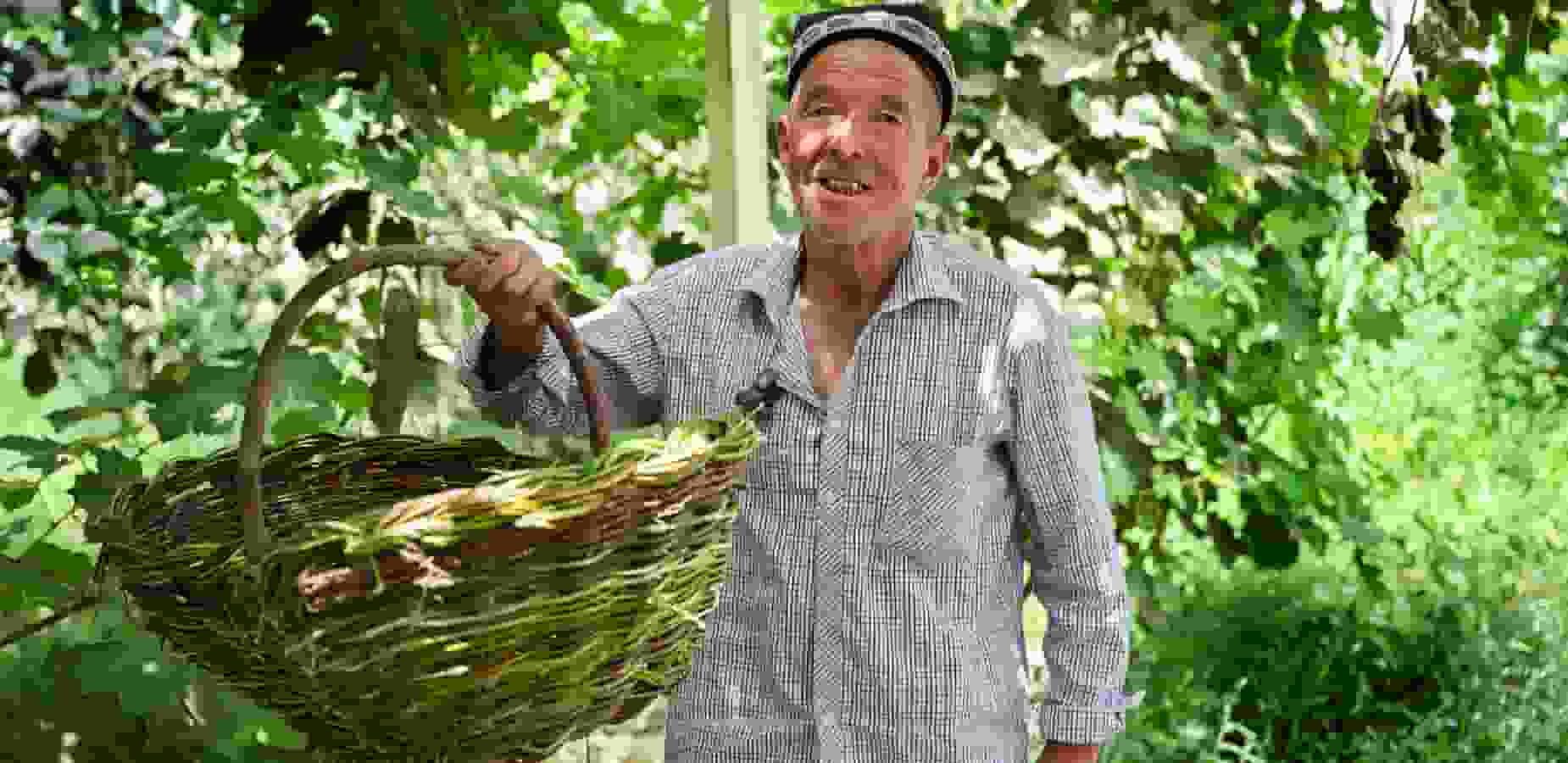
项目概况Project Overview
维吾尔族枝条编织(柳编)技艺是新疆吐鲁番、和田、喀什、阿克苏等地区广泛流传的传统手工编织技艺,2008年列入第二批国家级非物质文化遗产名录,项目编号Ⅶ-55,保护单位为吐鲁番市高昌区文化馆。该技艺利用新疆本地出产的红柳枝、胡杨枝、白柳枝、杨树枝、榆树枝等天然枝条为原料,全手工编织生产农具、生活用品、畜牧用具、工艺品四大类235种制品,在新疆已有近3000年传承历史。
Uyghur branch weaving (wickerwork) is a traditional hand-weaving craft widely spread in Turpan, Hotan, Kashgar, Aksu and other regions of Xinjiang. It was listed in the second batch of National Intangible Cultural Heritage in 2008, with project number VII-55, protected by Gaochang District Cultural Center of Turpan. The craft uses local natural branches such as red willow, Populus euphratica, white willow, poplar and elm as raw materials, hand-weaving 235 kinds of products in four categories: agricultural tools, daily necessities, animal husbandry utensils and crafts, with nearly 3000 years of inheritance history in Xinjiang.
维吾尔族枝条编织成品结实耐用、透气防潮、天然环保,广泛用于南疆各族群众生产生活,馕筐、果盘、抬把子、粮囤等制品是绿洲生活不可或缺的日常器具,是适应新疆干旱气候的传统生态手工技艺。(资料来源:S1、S2)
Uyghur branch weaving products are sturdy, breathable, moisture-proof and eco-friendly, widely used in production and life of all ethnic groups in southern Xinjiang. Products such as naan baskets, fruit plates, carrying racks and grain bins are indispensable daily utensils for oasis life, as a traditional ecological handicraft adapting to Xinjiang arid climate.
项目基本信息Project Basic Information
Collection Key Points
Content
Project Name(English name)
Uyghur Twig Weaving (Wickerwork) Craft
Project Category
Traditional craftsmanship
Heritage Level
National representative intangible cultural heritage project
Inclusion Batch & Number
Second batch, code: VII-55
Declared Region
Turpan City (Declaration Area)
Safeguarding Unit
Gaochang District Cultural Center of Turpan City
Main Distribution Area
Turpan, Hotan, Kashgar, Aksu and other regions in Xinjiang
Materials and Products
Natural twigs including red willow, poplar, white willow, poplar branch and elm branch; 235 types of products in four categories: farm tools, daily necessities, animal husbandry tools and crafts, with an inheritance history of nearly 3,000 years.
历史渊源Historical Origins
维吾尔族枝条编织技艺起源可追溯至新石器时代新疆地区的原始编织活动,距今近3000年历史,且末、尼雅遗址均出土过春秋战国时期的柳编织物残片;汉唐时期随着丝绸之路贸易发展,枝条编织技艺在西域绿洲广泛普及,成为当地居民生产生活的必备技艺,编织品不仅满足本地使用,还沿丝路销往中原地区。
The origin of Uyghur branch weaving can be traced back to primitive weaving activities in Xinjiang in the Neolithic Age, with nearly 3000 years of history. Fragments of wickerwork from Spring and Autumn and Warring States periods have been unearthed from Qiemo and Niya ruins. With the development of Silk Road trade in Han and Tang dynasties, branch weaving was widely popularized in Western Region oases, becoming an essential skill for local residents. Woven products not only met local needs, but were also sold to Central Plains along the Silk Road.
传统枝条编织技艺依靠家族口传心授、邻里相授传承,在吐鲁番、喀什、和田等地传承数十代,完整保留了西域传统平编、绞编、麻花编等多种编织技法,形成了独具地域特色的编织体系,是新疆绿洲文明的重要组成部分。(资料来源:S1、S3)
Traditional branch weaving is inherited orally through families and neighbors, passed down for dozens of generations in Turpan, Kashgar and Hotan. It completely retains traditional Western Region weaving techniques such as plain weave, twist weave and twist braid, forming a unique regional weaving system as an important part of Xinjiang oasis civilization.
文化价值与社会意义Cultural Value and Social Significance
一、文化价值
I. Cultural Values
1. 历史考古价值:它是新疆绿洲文明的活态见证,3000年传承历史完整保留了西域古代编织技艺体系,出土古编织残片为研究西域古代生产生活、丝路文化交流提供了重要实物证据。
1. Historical & Archaeological Value: As a living witness of Xinjiang oasis civilization, its 3000-year inheritance completely retains the ancient Western Region weaving system. Unearthed ancient weaving fragments provide important physical evidence for studying ancient production and life in Western Regions and Silk Road cultural exchanges.
2. 科学实用价值:枝条编织就地取材,利用当地耐干旱的灌木枝条为原料,成品透气防潮、结实耐用,完美适应新疆干旱多风沙的气候,是绿洲居民适应自然的生活智慧结晶,为当代生态设计、传统工艺创新提供了参考。
2. Scientific & Practical Value: Branch weaving uses local materials, taking drought-resistant shrub branches as raw materials. The products are breathable, moisture-proof and durable, perfectly adapting to Xinjiang arid and sandy climate, as the crystallization of life wisdom of oasis residents adapting to nature, providing reference for contemporary ecological design and traditional craft innovation.
3. 民族艺术价值:平编、麻花编、人字编、回纹编等多种编织技法形成独特纹理,成品造型质朴自然,融入维吾尔族传统审美,兼具实用性与艺术性,是新疆民族民间美术的重要组成部分。
3. Ethnic Artistic Value: Dozens of weaving techniques such as plain weave, twist braid, herringbone weave and fret weave form unique textures. The products are simple and natural in shape, integrating Uyghur traditional aesthetics, combining practicality and artistry, as an important part of Xinjiang ethnic folk art.
4. 非遗技艺价值:整套编织技法依靠口传心授,完整保留了20余种传统编织技法和200余种产品形制,是中国传统柳编技艺的重要地域分支。
4. Craftsmanship Value: The whole set of weaving techniques is passed down orally, completely retaining over 20 traditional weaving methods and over 200 product forms, as an important regional branch of Chinese traditional wickerwork.
二、社会意义
II. Social Significance
1. 文化传承价值:维系新疆各族群众共同的生活记忆与文化认同,传承绿洲传统生活技艺,推动少数民族优秀传统文化活态延续。
1. Cultural Inheritance Value: It maintains the common life memory and cultural identity of all ethnic groups in Xinjiang, inherits oasis traditional life skills, and promotes the living continuation of excellent ethnic minority traditional culture.
2. 文旅与乡村振兴价值:以非遗工坊、合作社为载体,开发柳编文创、体验项目,带动南疆农村村民就业增收,助力乡村振兴,让老技艺成为村民增收的“金枝条”。
2. Cultural Tourism & Rural Revitalization: Relying on intangible heritage workshops and cooperatives, develop wicker cultural creation and experience projects, drive employment and income increase of rural villagers in southern Xinjiang, boost rural revitalization, making old craft the "golden branches" for villagers' income growth.
3. 生态工艺价值:枝条编织原料为可再生灌木枝条,生产过程零污染,成品可自然降解,是典型的生态环保传统工艺,符合当代绿色发展理念。
3. Ecological Craft Value: Branch weaving uses renewable shrub branches as raw materials, with zero pollution in production process, and products are naturally degradable, as a typical eco-friendly traditional craft conforming to contemporary green development concept.
4. 文化交流价值:作为新疆代表性传统技艺,是对外展示新疆民族文化、传统技艺的重要载体,促进各民族文化交流,铸牢中华民族共同体意识。(资料来源:S1、S2、S4)
4. Cultural Exchange Value: As a representative traditional craft of Xinjiang, it is an important carrier for displaying Xinjiang ethnic culture and traditional crafts to the outside, promoting ethnic cultural exchanges and forging the sense of community for the Chinese nation.
工艺特征Craft Characteristics
维吾尔族枝条编织技艺以就地取材、全手工编织为核心特征,原料全部采用新疆本地天然生长的红柳、胡杨、白柳、杨、榆等灌木枝条,无需额外加工材料,仅以削刀、枝剪为简单工具,经选料、浸泡、削条、编织、锁边、修整几道工序即可完成成品。
Uyghur branch weaving is characterized by local materials and full hand-weaving. All raw materials are natural shrub branches locally grown in Xinjiang such as red willow, Populus euphratica, white willow, poplar and elm, no additional processing materials needed, only using simple tools like paring knife and branch scissors. Products can be completed through material selection, soaking, strip paring, weaving, edge locking and trimming.
编织技法丰富多样,包含平编、绞编、麻花编、六角编、人字编、回纹编等20余种传统编法,可编织出不同纹理效果;成品造型随用途变化,涵盖生产农具、生活器具、畜牧用具、装饰工艺品四大类235种产品,结实耐用、透气防潮、天然无漆,可使用十余年不坏,完美适应南疆干旱多风沙的气候环境,是绿洲生活智慧的集中体现。(资料来源:S1、S3、S5)
It has rich weaving techniques, including over 20 traditional methods such as plain weave, twist weave, twist braid, hexagonal weave, herringbone weave and fret weave, which can produce different texture effects. Product shapes vary with uses, covering 235 kinds of products in four categories: agricultural tools, daily utensils, animal husbandry appliances and decorative crafts. The products are sturdy, breathable, moisture-proof and natural without paint, can be used for more than ten years, perfectly adapting to the arid and sandy climate of southern Xinjiang, as a concentrated embodiment of oasis life wisdom.
图注:维吾尔族枝条编织成品馕筐与编织纹理 / Caption: Uyghur branch weaving product naan basket and weaving texture
工艺流程详解Detailed Craft Process
维吾尔族枝条编织遵循传统手工编织工序,依次完成原料采集、选料剪枝、浸泡软化、削条处理、起底做型、编织成型、锁边收边、修整定型8道核心工序,全程纯手工操作,无机械加工,普通生活用品编织周期约1-2天,大型复杂器具需3-5天完成。
Uyghur branch weaving follows traditional hand-weaving process, including 8 core processes: raw material collection, material selection and pruning, soaking softening, strip paring, base starting and shaping, weaving forming, edge locking and trimming. The whole process is completely handmade without machinery. Daily necessities take about 1-2 days to weave, large and complex utensils take 3-5 days.
原料采集与预处理 Raw Material Collection & Pretreatment
1.1 采条:秋季落叶后采集一年生柔韧枝条,淘汰老硬粗枝,按原料种类分类捆扎;
1.1 Branch Collection: Collect annual flexible branches after leaves fall in autumn, eliminate old hard branches, bundle by material type;
1.2 浸泡:将枝条放入水池浸泡1-15天(夏季1-2天,冬季10-15天),使枝条充分吸水软化,便于弯曲编织不断裂;
1.2 Soaking: Soak branches in water pool for 1-15 days (1-2 days in summer, 10-15 days in winter) to fully absorb water and soften, easy to bend without breaking during weaving;
1.3 削条:取出泡软枝条,用削刀削去枝节、外皮,修剪成粗细均匀的编织条备用。
1.3 Strip Paring: Take out softened branches, pare knots and outer bark with paring knife, trim into uniform weaving strips for use.
(资料来源:S1、S2)
起底做型 Base Starting & Shaping
2.1 摆经:将粗枝条作为骨架经条,按成品形状放射状或平行排列固定,做出器具底部基础形状;
2.1 Warp Arrangement: Use thick branches as skeleton warp strips, fix radially or parallel according to product shape, make the basic shape of utensil bottom;
2.2 立架:圆形器具需提前立起经条,固定器具高度和轮廓,方形器具直接从底部向上编织。
2.2 Frame Erecting: For round utensils, erect warp strips in advance to fix height and outline; for square utensils, weave directly upward from the bottom.
(资料来源:S2、S3)
编织成型 Weaving Forming
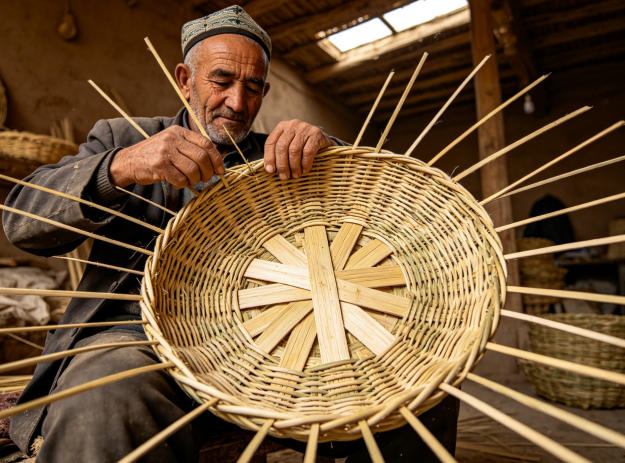
图注:圆筐打底起经工序 / Caption: Bottoming and warp starting process of round basket
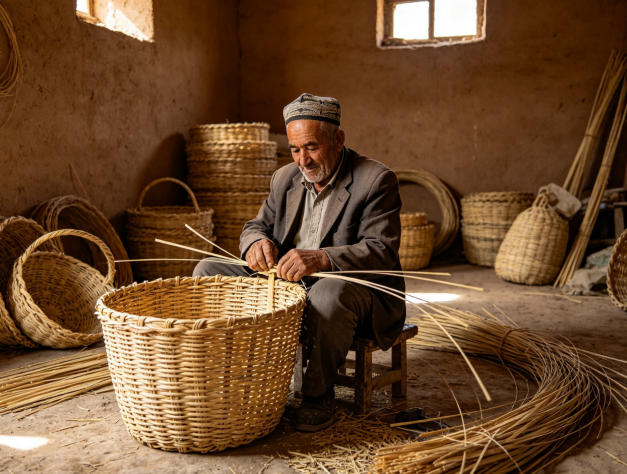
图注:匠人手工编织主体工序 / Caption: Craftsman hand-weaving main body process
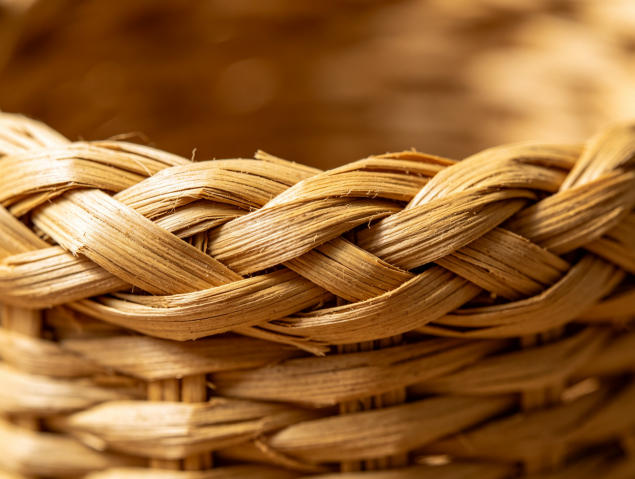
图注:传统麻花绞编工艺纹理特写 / Caption: Close-up of traditional twisted plaiting craft texture
3.1 编身:用细枝条作为纬条,按照不同编织技法(平编、绞编、麻花编等)一挑一压穿梭编织,从底部向上逐步成型;
3.1 Body Weaving: Use thin branches as weft strips, interweave according to different techniques (plain weave, twist weave, twist braid etc.) with pick-and-press method, gradually form from bottom to top;
3.2 做型:编织过程中随时调整枝条松紧度,塑造器具弧度和形状,保证成品周正结实;
3.2 Shaping: Adjust tightness of branches at any time during weaving, shape radian and form of utensils to ensure products are regular and sturdy;
3.3 插花:复杂花纹器具需穿插不同颜色枝条(红柳红、胡杨黄、柳枝白),编出几何纹样、装饰图案。
3.3 Pattern Inserting: For complex pattern utensils, insert branches of different colors (red willow red, Populus euphratica yellow, willow white) to weave geometric patterns and decorative designs.
(资料来源:S3、S5)
锁边修整 Edge Locking & Trimming
4.1 锁边:编织到预定高度后,将突出经条弯折收头,用扭编、扣编技法锁牢器具边缘,防止松散;
4.1 Edge Locking: After weaving to predetermined height, bend protruding warp strips to close ends, lock utensil edges firmly with twist and buckle weaving techniques to prevent loosening;
4.2 修整:用枝剪剪去多余枝条头,修整不平整处,调整整体形状;
4.2 Trimming: Cut off excess branch ends with branch scissors, trim uneven parts and adjust overall shape;
4.3 定型:将成品阴干定型,部分器具可上油、打蜡做防虫防腐处理,延长使用寿命。
4.3 Shaping: Dry finished products in shade for setting, some utensils can be oiled or waxed for insect and corrosion prevention to extend service life.
(资料来源:S1、S4)
文化内涵与特色Cultural Connotations and Features
维吾尔族枝条编织是新疆绿洲人民适应自然、利用自然的生活智慧结晶:南疆干旱少树,当地人民就地取材,利用沙漠边缘耐干旱、耐盐碱的红柳、胡杨等灌木枝条编织生活器具,不破坏乔木资源,成品用坏后可自然降解回归自然,是典型的生态循环传统技艺,蕴含着朴素的生态理念。
Uyghur branch weaving is the crystallization of life wisdom of Xinjiang oasis people adapting to and utilizing nature: southern Xinjiang is arid with few trees, local people use local materials, weaving daily utensils from drought-resistant and salt-tolerant shrub branches such as red willow and Populus euphratica on desert edge, without destroying arbor resources. Worn-out products can be naturally degraded back to nature, as a typical ecological cycle traditional craft containing simple ecological concepts.
枝条编织承载着新疆各族人民共同的生活记忆:馕筐、果盘、抬把子、粮囤等编织品是南疆家家户户必备的生活器具,编织过程中邻里互助、母女相传的传承方式,承载着绿洲社会的人情往来与家庭温情,是新疆多民族共居共享的生活文化体现。
Branch weaving bears the common life memory of all ethnic groups in Xinjiang: woven products such as naan baskets, fruit plates, carrying racks and grain bins are necessary daily utensils for every household in southern Xinjiang. The inheritance mode of neighborhood mutual help and mother-daughter transmission during weaving bears the human relations and family warmth of oasis society, reflecting the shared life culture of multi-ethnic co-residence in Xinjiang.
当代枝条编织在保留传统实用器具的基础上,发展出花篮、装饰画、摆件、文创产品等新的品类,融入现代生活审美,成为新疆特色非遗IP,通过电商、文旅体验等方式走向全国,让古老技艺在当代焕发新的活力。
On the basis of retaining traditional practical utensils, contemporary branch weaving has developed new categories such as flower baskets, decorative paintings, ornaments and cultural creative products, integrating into modern life aesthetics, becoming a characteristic intangible cultural heritage IP of Xinjiang, going to the whole country through e-commerce and cultural tourism experience, making ancient craft glow with new vitality in contemporary times.
传承与保护现状Inheritance and Protection Status
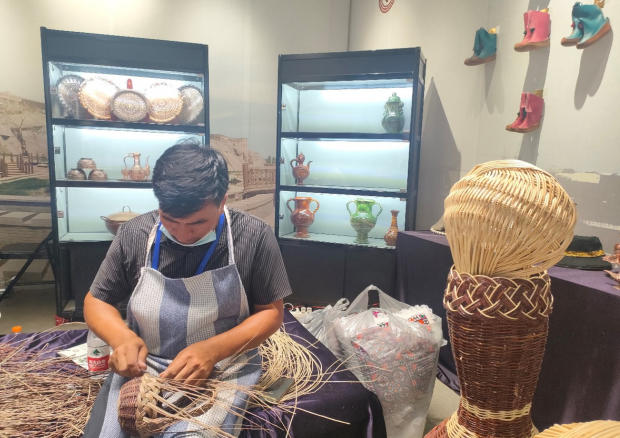
维吾尔族枝条编织(柳编)技艺2008年列入第二批国家级非物质文化遗产名录,目前代表性传承人有库尔班·克依木(吐鲁番)、玉苏甫·卡依木(伽师)等,在吐鲁番高昌区、喀什伽师县、阿克苏库车市等地建立了柳编非遗工坊、专业合作社,形成了技艺传承、批量生产、文创开发、文旅体验的完整保护体系。
Uyghur branch weaving (wickerwork) was listed in the second batch of National Intangible Cultural Heritage in 2008. Current representative inheritors include Kurban Keyimu (Turpan), Yusup Kayimu (Jiashi) etc. Wickerwork intangible heritage workshops and professional cooperatives have been established in Gaochang District of Turpan, Jiashi County of Kashgar, Kuqa City of Aksu, forming a complete protection system integrating inheritance, mass production, cultural creation development and cultural tourism experience.
近年来通过非遗进校园、非遗工坊培训、短视频传播、电商销售等方式,枝条编织技艺带动了南疆多地农村村民就业增收,库车、伽师等地的柳编产品不仅供应本地市场,还销往内地省市,成为当地乡村振兴的特色产业。但同时也面临年轻传承人不足、传统实用器具需求减少等问题,需要进一步加强创新开发与传承支持。(资料来源:S1、S6)
In recent years, through intangible heritage entering campuses, workshop training, short video communication and e-commerce sales, branch weaving has driven employment and income increase of rural villagers in many places of southern Xinjiang. Wicker products from Kuqa and Jiashi are not only supplied to local market, but also sold to inland provinces, becoming a characteristic industry for local rural revitalization. Meanwhile, it also faces problems such as insufficient young inheritors and reduced demand for traditional practical utensils, which needs further innovation development and inheritance support.
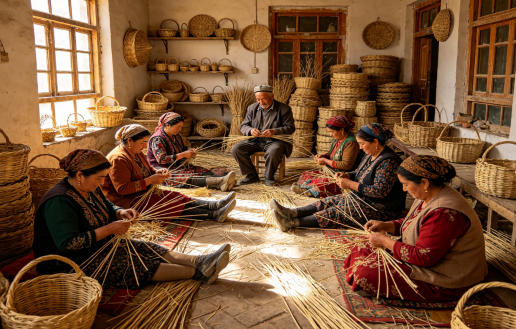
图注:南疆非遗枝条编织工坊活态传承场景 / Caption: Living inheritance scene of intangible cultural heritage branch weaving workshop in southern Xinjiang
图片展示Photo Gallery
工艺流程图片Craft Process Photos
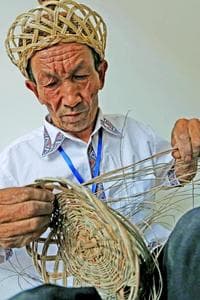
维吾尔族枝条编织_穿条_02
Uyghur Twig Weaving - Weaving Strips_02
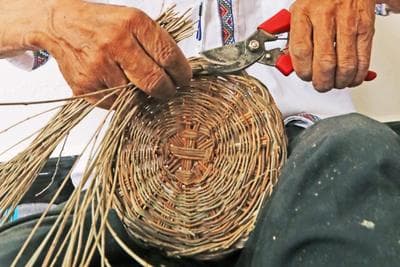
维吾尔族枝条编织_枝剪_03
Uyghur Twig Weaving - Branch Cutting_03
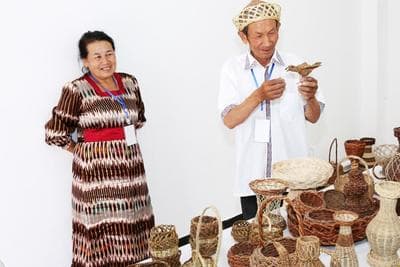
维吾尔族枝条编织_针线筐_04
Uyghur Twig Weaving - Sewing Basket_04
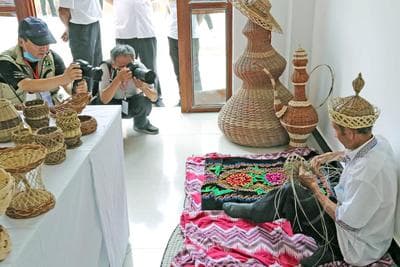
维吾尔族枝条编织_插条_05
Uyghur Twig Weaving - Inserting Strips_05
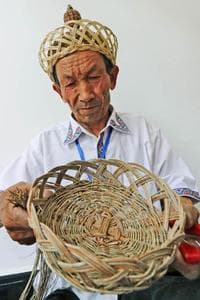
维吾尔族枝条编织_馕筐_06
Uyghur Twig Weaving - Nan Bread Basket_06
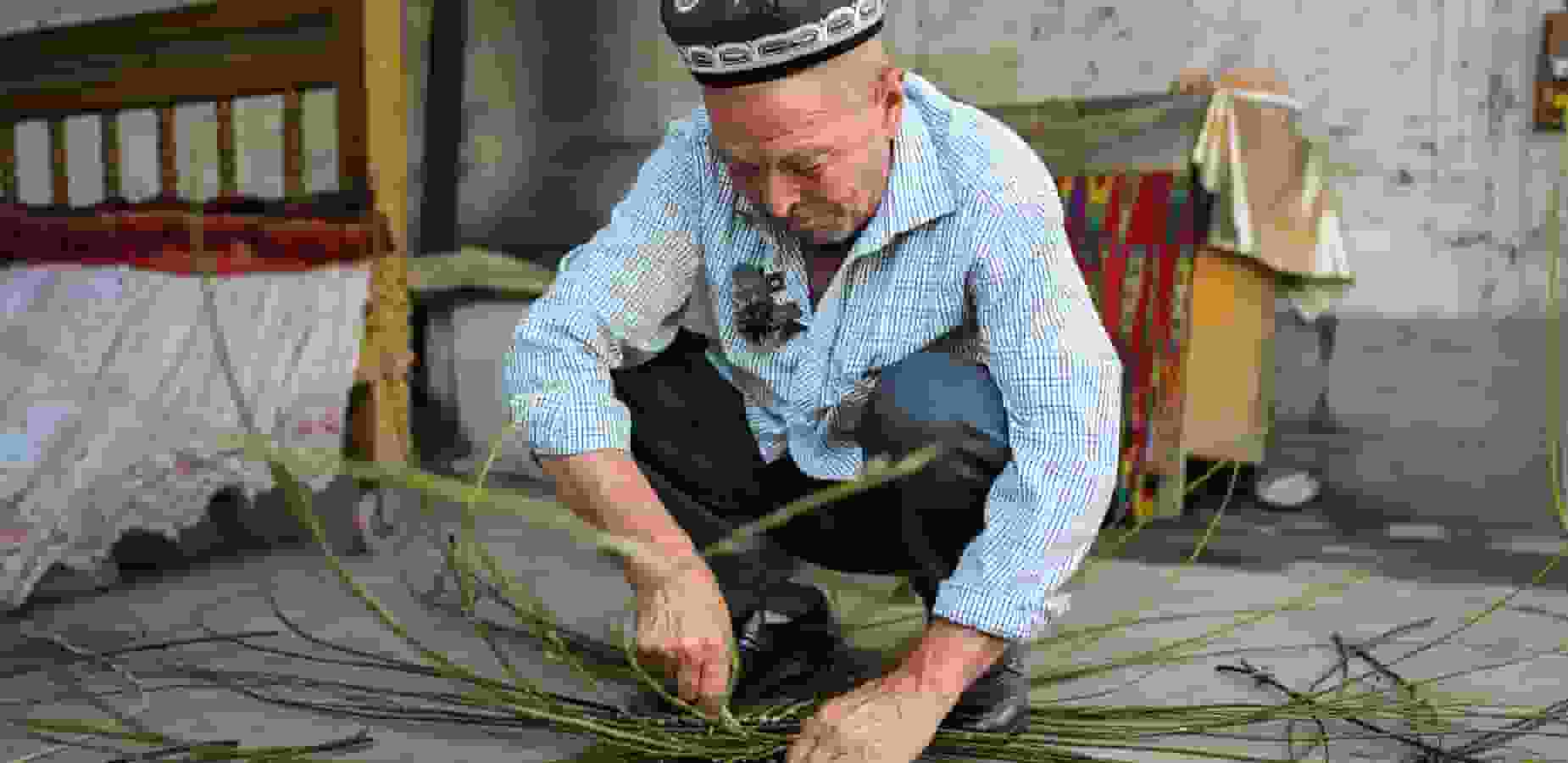
维吾尔族枝条编织_削条_07
Uyghur Twig Weaving - Shaving Twigs_07
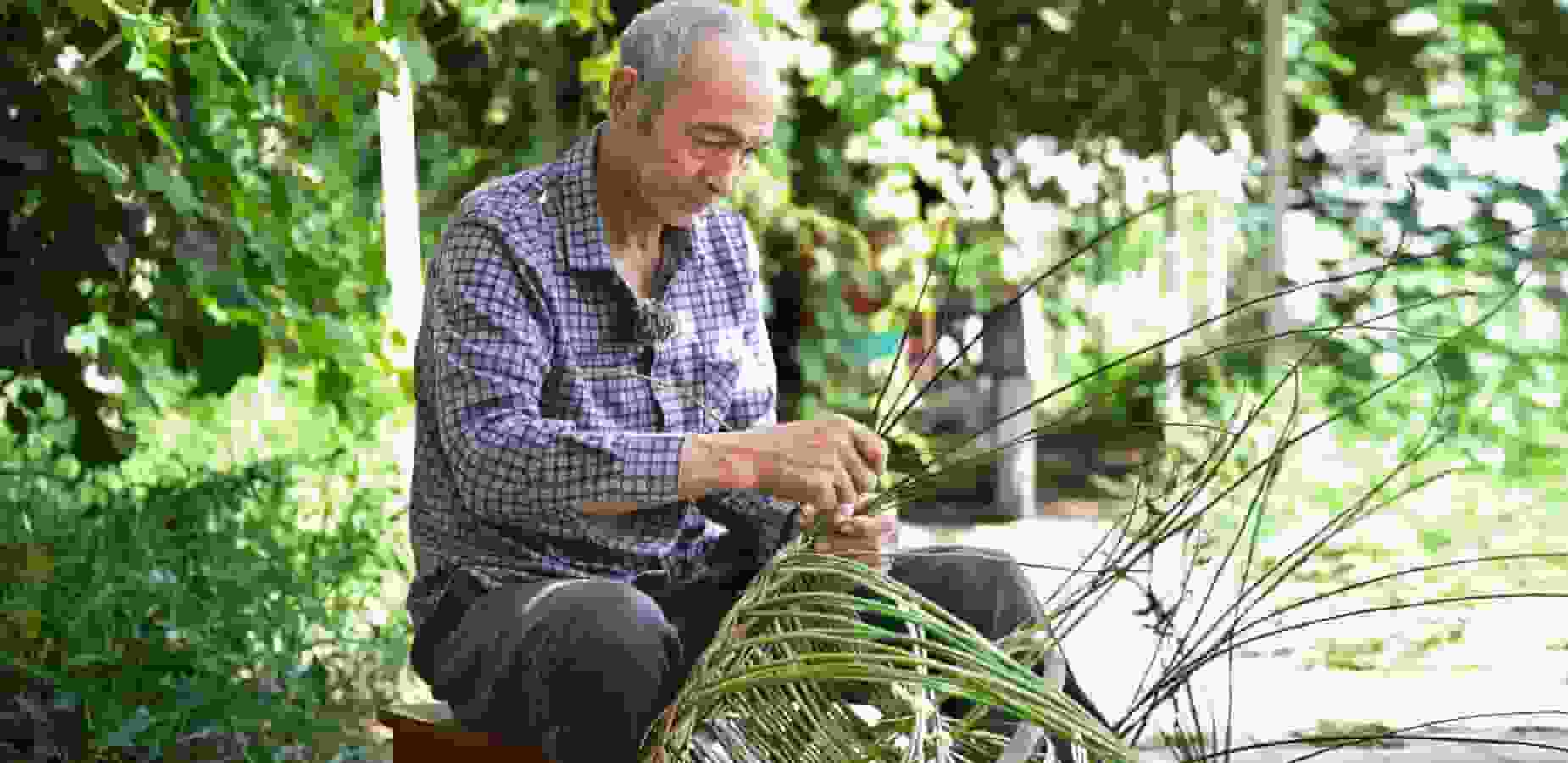
维吾尔族枝条编织_扭条_08
Uyghur Twig Weaving - Twisting Strips_08
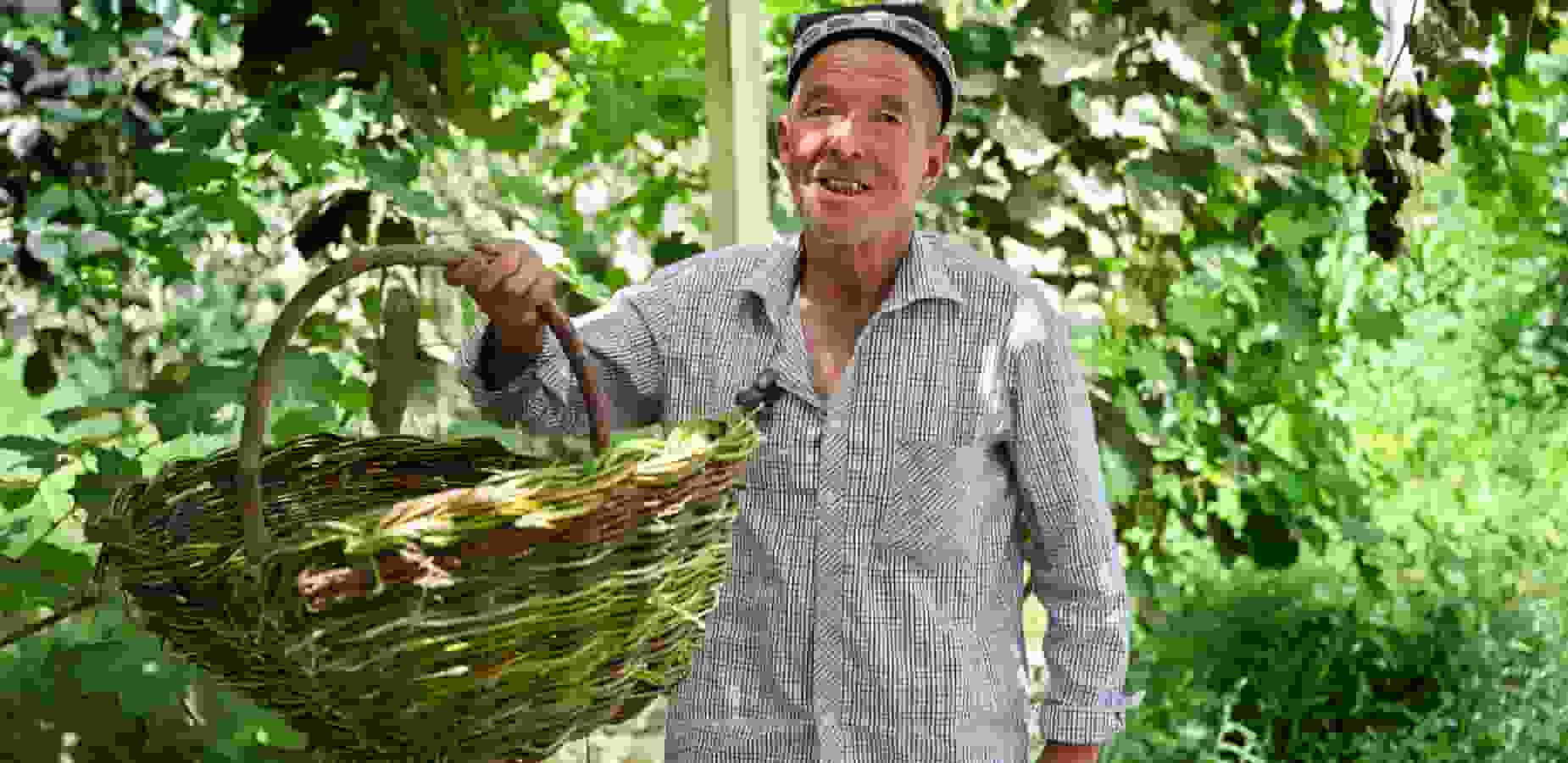
维吾尔族枝条编织_白柳枝_09
Uyghur Twig Weaving - White Willow Twigs_09
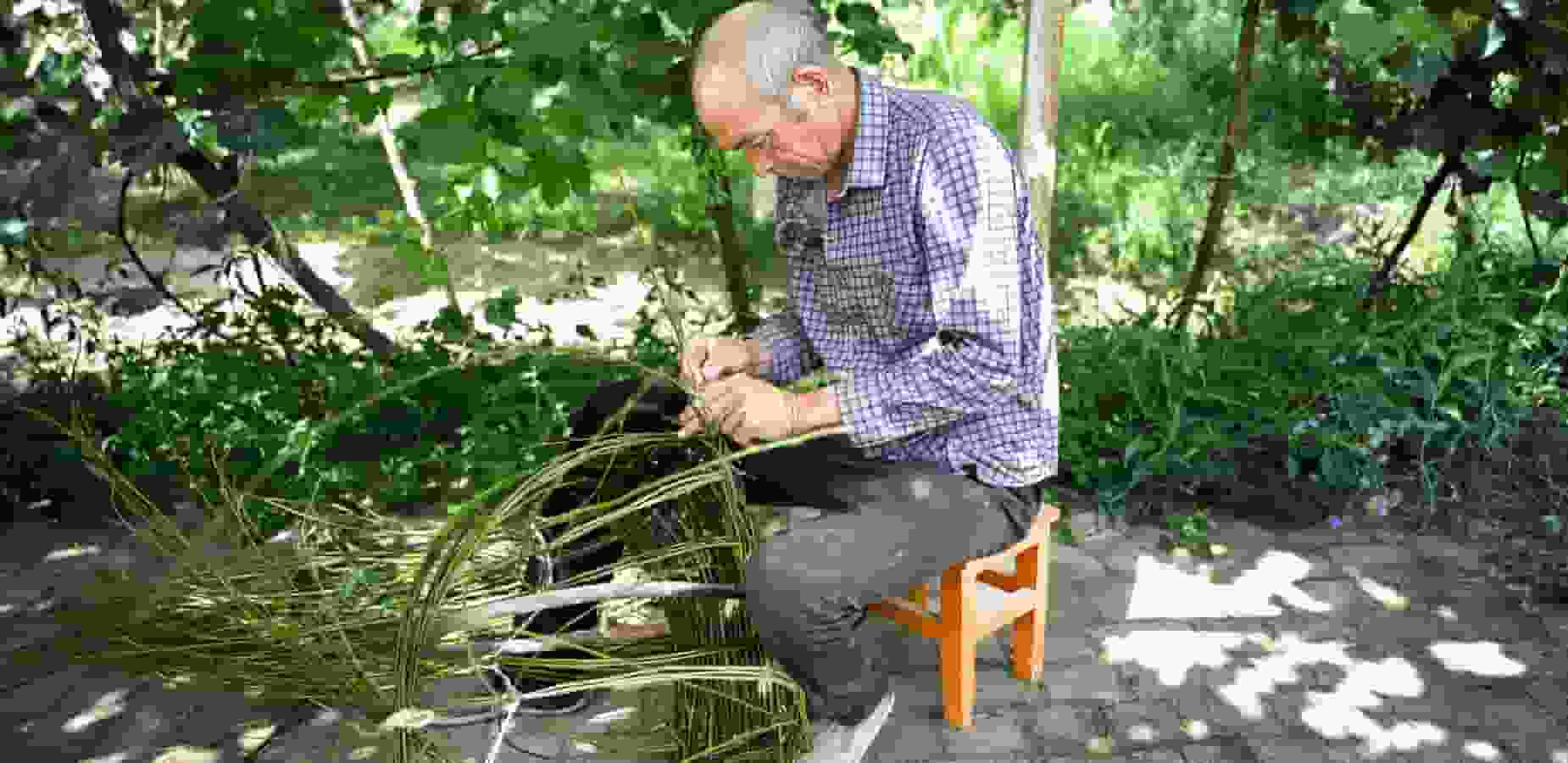
维吾尔族枝条编织_削刀_10
Uyghur Twig Weaving - Shaving Knife_10
视频展示Video Gallery
视频资料Video Resources
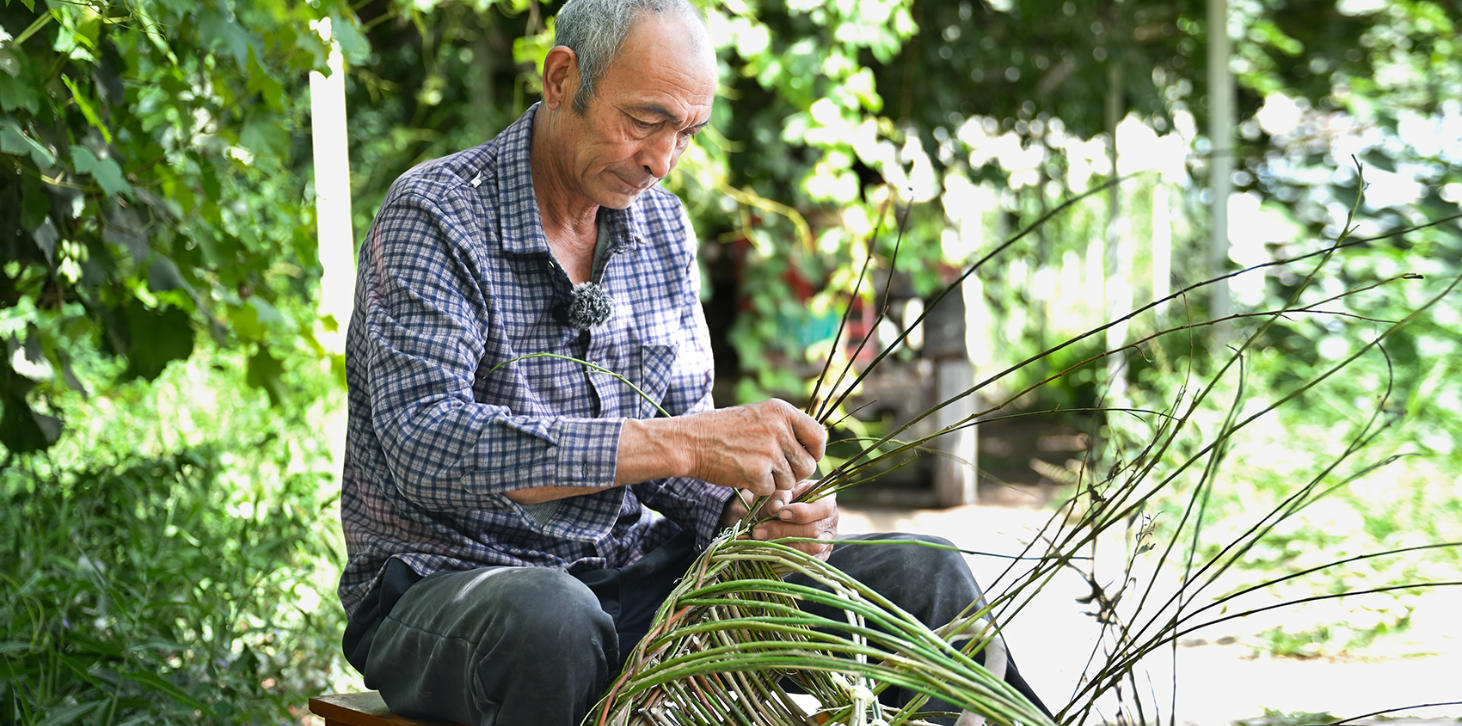
维吾尔族枝条编织技艺视频2
Uyghur Twig Weaving Craft - Video 2
参考文献与资料来源References and Sources
以下来源均为政府官网、国家非遗平台、新华社或中央主流媒体等权威来源;英文内容为依据中文权威资料整理、翻译和概括。访问日期:2026-07-29。
The sources below are official or authoritative sources. English content is translated and summarized from authoritative Chinese sources. Access date: July 29, 2026.
中国非物质文化遗产网:中国非物质文化遗产代表性项目名录 - 柳编(维吾尔族枝条编织) https://www.ihchina.cn/project_details/14104
吐鲁番市人民政府非遗专栏《库尔班·克依木:非遗“柳编”编织幸福生活》 https://www.tlf.gov.cn/tlfs/c106222/202203/329878b134594b32a04d927ff8030cc4.shtml
天山网《一个新疆柳编人的非遗传承梦》 https://www.ts.cn/topic2020/shzt/ttgsh2022/
中国日报网《新疆库车市:红柳变“金枝” 老手艺撑起乡村振兴“钱袋子”》 https://xj.chinadaily.com.cn/a/202601/15/WS69688714a310942cc499b5d6.html
中新网新疆《玉苏甫·卡依木:“柳编”非遗代表性传承人用巧手编织幸福生活》 http://www.xj.chinanews.com.cn/dizhou/2025-04-17/detail-iheqqsxx4461264.shtml
阿克苏新闻网《库车市:发展柳编特色产业 开辟线上增收新渠道》 http://www.aksxw.com/sy/fhj/202601/t20260126_32720021.html
双语核心词汇表Core Bilingual Glossary
Chinese Term